

Back in 2013 I took my first job in the SaaS world, as a technical support agent for a “teenager” level website building platform introducing me to the ever popular Customer Satisfaction survey, or CSAT.
For the first few months, I thought nothing of it. Close out a ticket, get a (positive) CSAT rating, move on. Great validation for people-pleasing young me.
Then my first negative CSAT came in.
My emotions were the same devastation of a straight-A student receiving their first B. I opened the survey to look for any reason as to why, but there was none. Just a one-star rating.
My manager saw the rating, looked at the ticket and her years of experience gave her a strong suspicion of the reason. She didn’t share her thoughts so as not to take away from the learning experience, and instead coached me on how to follow up with the customer for an explanation.
Turns out it had nothing to do with me. The customer found my answer to be thorough, speedy, and polite. Everything you want in a support agent. They were just upset that the company’s policy meant they couldn’t have a refund.
Simply put, they didn’t like being told no.
The Problems with CSAT
A well asked CSAT question is specific and detailed, “How satisfied were you with the service you received?” The problem with CSAT is the word “satisfied” because satisfaction itself is a subjective feeling shaped by the entire outcome of the experience.
A customer can get a fast, correct, friendly answer and still walk away unsatisfied if the answer they receive is one they didn’t want. Think back to the last time you felt good about hearing a “no” answer.
It probably only felt good if the question was something like, “Is it broken?” or “Is this going to cost a lot of money?”
Add to that that satisfaction runs through whoever is answering the question. Research on dispositional affect found that people who are naturally more positive rate their satisfaction higher, regardless of service quality.
Basically, people who are generally positive are much more likely to give a positive rating, no matter how poor the service was. Though, shockingly the reverse wasn’t found to be true.
Either way, base personality skews the data before the interaction even starts.
Calling it CSAT instead of saying “customer satisfaction survey” also makes it easy to forget that this is not a survey about how well an agent did, but a survey of how satisfied a customer felt, filtered through their own baseline taking into account the outcome of the interaction.
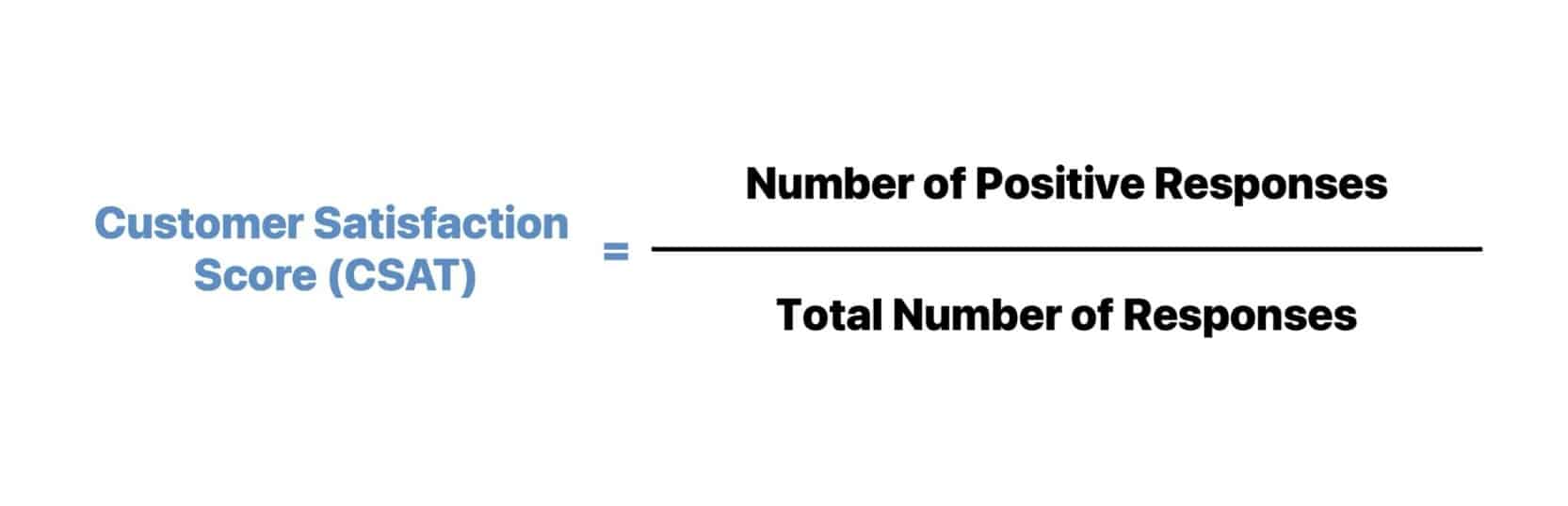
Source: Wallstreetprep
This wouldn’t be a problem if CSAT wasn’t primarily used to measure the quality of an agent. But it is, and that mislabeling creates several real problems.
CSAT is a lagging metric
Customer satisfaction surveys are given after a support interaction is completed. The time a score lands in your inbox, the conversation that led to the survey is already closed and so is your window to fix a negative customer sentiment.
You can learn from it, but it’s hard to save it.
Yes, you can follow up, but this comes with its own awkwardness. If you offer to repair the situation, the customer might feel you only care about making sure your metrics look good, not about them as a person. And for teams handling any real volume, there isn’t much time for follow-up.
So, low scores get logged, discussed in a weekly meeting, and moved past, at best. At worst they lead to employee dismissal.
The sample is a lie (or at least heavily biased)
A “good” CSAT response rate typically falls in the 10-30% range, with anything above 40% considered strong. That means most teams are building their whole read on customer sentiment from about a quarter of the people who actually contacted them.
And that quarter isn’t a random sample.
A delighted customer is more likely to reply than someone feeling neutral, and a furious customer is much more likely to respond.
That leaves you with a score built almost entirely from your worst and best interactions, with almost nothing from an average one.
Surveying too often creates burnout
If you ask the same customer for a rating every time, they eventually stop answering (or just tick a box on autopilot). Neither tells you anything real or helpful.
There is often no why attached
A low score — or a high one for that matter — is meaningless without a why.
As I shared above, a 1 out of 5 rating tells you the customer is unsatisfied, but with what? The agent? The product? The policy? The price? The effort it took to get an answer?
All of these have the potential to be affecting the customer’s satisfaction level with that specific experience.
But when they are all folded into one score you have no insight into whether the agent was rude, if your policy needs adjusting, or if the customer just thinks pouting will lead to getting what they want.
Customers can leave comments or context, but that’s asking for even more of them.
CSAT is an easy system to game
Tie a single score to an agent’s job security and you’ve created a system that rewards gaming the survey.
It implies to a customer that positive feedback is critical and plenty of people will round up out of guilt that they might risk contributing to someone’s unjust termination, no matter what actually happened during the support interaction.
Agents also quickly learn that timing can heavily influence ratings.
Send the survey the moment a good conversation closes for the best chance to get them to respond with their positive feedback. Suspect a conversation went badly?
Just draw out the length of time it takes to count the issue as resolved and the ticket closed, then wait a few more days before sending the CSAT. The customer will likely have cooled off enough that they just can’t be bothered to reply.
There are a dozen other ways to game CSAT to get more positive looking results, which means that an isolated CSAT score can almost never be trusted.
Even the score explanations lie
When a customer does provide context with their CSAT rating, you have to take it with a grain of salt.
I’ve seen someone click the wrong end of a scale because they didn’t realize 1 was worst and 5 was best. I’ve seen scores be positive and comments be extremely negative.
That website builder I worked for that I mentioned earlier? It wasn’t WordPress, but boy did people come to us for help with their WordPress sites.
And no matter how nice you try to be about it, telling a customer that they need to go elsewhere for help has a tendency to lead to a negative CSAT.
I’ve also filled out my own share of surveys that never asked about the thing that actually went wrong. A movie theater survey recently asked me to rate seat comfort and bathroom cleanliness. Those were great, so I rated them as such.
But my answer to overall satisfaction was still a 3 out of 5, and they’ll never know why.
That’s because they didn’t ask me if the air conditioning was broken in the middle of July, or if the construction being done at the front of the theater led me to feeling a bit anxious when I walked in with my three-year-old who was so excited there was scaffolding he could climb on.
Why We Keep Hunting for “the One Metric”
Buried in most conversations about fixing CSAT is the assumption that a single metric based on a single support interaction should predict likelihood of retention.
Not only is that an absurd assumption, it’s not fair to support teams to keep chasing a metric built on it.
Last month I was working with a company whose product had a lot of promise but was genuinely confusing.
It had far too many of the wrong features, not enough of the right ones, the left navigation menu had at least 60 things to click on, and there was so much going on within any one page it was impossible to figure out where to begin.
It only took about 20 minutes using their free trial for me to decide it was not the bookkeeping tool of my dreams, and I’d be putting far more time into workarounds than was worth the money I might save by using it compared to other tools.
I shared this much when canceling my trial, because as a career support person, I know how valuable feedback can be.
Their head engineer reached out to me an hour later asking for some concrete examples of improvements needed, so I gave him three easy wins, which — to my astonishment — were implemented the same day.
And while that is a phenomenal level of support, I still walked away. Why? Because the product was not what I needed it to be, and my time is worth too much for me to be logging every error in their product in exchange for three free months of a $15 software.
My point is: yes, bad support can contribute to driving people away, but good support alone cannot retain customers if the product doesn’t fit their needs.
Let me say it louder for the people in the back:
Support is not solely responsible for customer retention. They are a single piece of the overall puzzle.
That’s the real flaw in chasing one perfect number: a single score can’t tell you which piece of the puzzle needs the work.
The fix isn’t a smarter single metric — it’s separating the causes, which is exactly what the CSAT alternatives below are built to do.
A More Inclusive Way to Measure Support
It’s going to be difficult to convince leadership that CSAT isn’t worth tracking, so it’s not going away. But it doesn’t need to. It still has its place, but it needs other metrics to help make it useful.
Report CSAT twice
Yes, this is the centerpiece fix.
One of your best moves isn’t dropping CSAT, it’s reporting it twice.
Before reporting anything, throw out ratings from people who were never entitled to support in the first place.
There are a multitude of reasons this could happen:
- Maybe your product is often mistaken for another.
- Maybe people assume your product does something it doesn’t.
- Maybe your product is a B2B product that is resold B2C and your customers’ customers come looking for help from you.
Throw ‘em out, no matter the score. They aren’t your customers, so their answers are invalid data. Do not include that data in your CSAT report.
Once you’ve thrown out that data, say you’re left with 200 people who answered your CSAT, giving you an overall score of 78% (this is considered a “good” CSAT)
First, report that 78%. This is the number leadership expects, and there is no getting around that expectation, so don’t fight it.
Now, let’s say that of those 200 answers, say 30 of them were determined to be directly because of a policy the agent didn’t write, a bug the agent didn’t ship, a pricing decision the agent didn’t make. Remove those, leaving you with 170 responses that were actually about the interaction with your agent.
For this example, let’s say those 170 responses came out at a 90% CSAT. As far as CSAT goes, this is an exceptional score.
Your support team is crushing it when dealing with things they’re actually responsible for. Report that number, too.
The CSAT Tax
Now let’s do some math for the rest of the example. First, remember that CSAT typically works on top-2-box scoring, meaning a 4 or 5 out of 5 counts as “satisfied” and anything else counts as dissatisfied.
-
You had 200 total CSAT responses. 170 were support-driven, so the remaining 30 were related to things like price/policy/product).
-
You already know that you had a 78% CSAT from the 200 responses, meaning 156 of your total responses were “satisfied” (i.e. they gave you a 4 or 5 rating)
-
You also know that the 170 support-driven responses gave you a 90% score, which means you had 153 “satisfied” responses.
-
With 156 total satisfied responses and 153 of those being support-driven, that means only 3 of the 30 non-support driven responses were satisfied.
That 10% is the real headline: it’s the customer satisfaction rate inside the responses your support team can’t influence.
And the 12-point gap between the 78% leadership sees and the 90% your team actually earned? Call that the CSAT Tax — the cost your support team pays on CSAT for situations it doesn’t own.
Here’s the part most teams skip:
That excluded group of 30 responses shouldn’t just vanish from your report. It becomes someone else’s report.
Package those 30 responses and their 10% satisfaction rate, and hand them to product as their own number to track. It’s no longer a vague complaint about the refund policy in a Slack thread, it’s now a metric with an owner and a trend line, living with the team that can influence the results.
Remember my first negative CSAT, the customer who was thorough, speedy, and politely told no? Under this system, that one star never touches my performance as an agent. It lands in product’s queue, tagged as a policy-driven response, right where it belongs.
Report both numbers. Because leadership still gets the overall CSAT they expect, but they also get clarity around the CSAT score your support team actually influenced.
Customer effort score (CES) versus CSAT
CSAT vs. CES isn’t a choice between two competing scores, because there’s a difference in what each one measures. CSAT asks how the customer felt about the outcome; CES asks how hard they had to work to get there.
Instead of rating satisfaction, CES has the customer rate the amount of effort it took to get their issue resolved, usually on a scale from “very easy” to “very difficult.” The logic is sound, and it’s an attempt to measure the friction you’re creating for your customers.
CES is earning its place even more than it used to with the trend for AI to absorb more of the frontline support work. AI is being handed the simplest, most repeatable requests, but AI still frequently misunderstands the assignment.
But CES is still one number, and low customer effort also doesn’t guarantee a good outcome. A customer can get a fast, frictionless response that is entirely wrong, but they don’t know it’s wrong.
That’s not a win, it’s just a delayed bad day for a support agent when the customer ultimately figures out your AI hallucinated.
So treat it as one more piece of the puzzle, not a replacement for CSAT.
Customer sentiment
CSAT’s sampling problem has a fix that doesn’t involve surveying anyone. With the advent of AI, it’s now possible to run sentiment analysis across every conversation, not just the ones where a customer bothered to click on a rating.
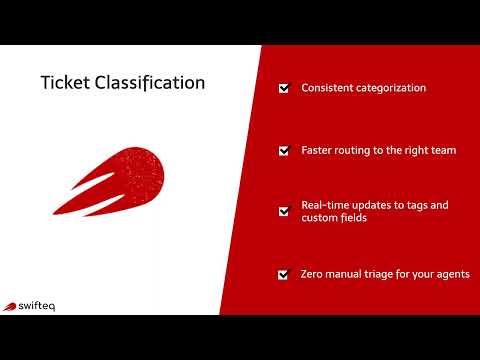
If you’re using Zendesk, Swifteq’s Ticket Classification app can tag tickets by contact reason, but it can also flag customer sentiment in the same pass. That means you can finally get a sense of how customers are feeling in the 75+% of interactions that never generate a CSAT response.
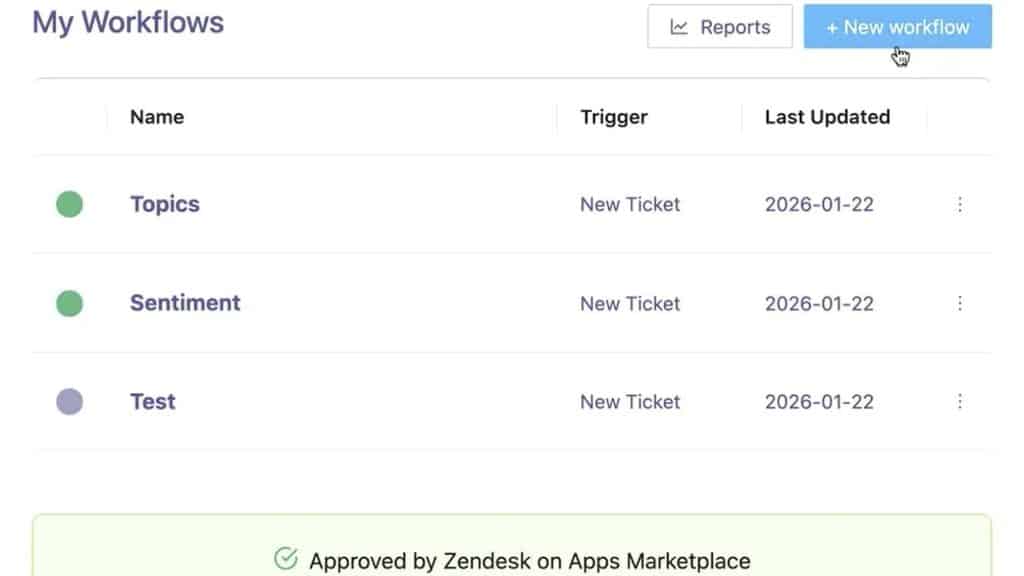
But again, this should be one data point, not the only one. Sentiment alone doesn’t tell you if the customer is upset about a policy or if an agent’s tone needs coaching. But it does tell you where to dig a bit deeper.
Agent QA
CSAT simply has no way to separate an agent handling something poorly from someone being unsatisfied despite a full, polite, correct answer.
A QA score doesn’t have that problem, though. It’s built entirely around what an agent can control in each conversation, not how the customer ultimately felt about the outcome.
The mechanics of a QA score are relatively straightforward.
Score a sample of conversations against a chosen rubric. Tone, adherence to process, correct use of resources, whether the case was escalated when it should have been.
Then tally the rubric, so each conversation has a point value. Average the scores across the agent or team over a set time period, and you have a number you can report and track in the same way you’d report CSAT or CES.
As with CES, put this alongside the other metrics, instead of using it as a replacement.
CSAT tells you a customer was unhappy. A QA score tells you if the person on the phone was kind and knowledgeable. Report both, and you know if customer satisfaction levels are a people problem or something else entirely.
Putting It Together: a Practical Scorecard
So if you’re asking how to measure customer satisfaction without leaning on one flawed number, or wondering how to measure support KPIs beyond CSAT alone, the answer isn’t dropping CSAT. It’s adding the data CSAT can’t give you.
Hooray, more KPIs. The executive team will be so pumped!
| Metric | What it actually tells you | Who owns the answer |
| RAW CSAT | Overall satisfaction | Leadership, as a baseline |
| Agent-driven CSAT | How your team performed once policy and product limitations are excluded | Support |
| Product/Policy CSAT | Satisfaction among the responses your support team can’t control — now product’s own number to track | Product |
| CSAT Tax | The point gap between raw and agent-driven CSAT — how many points your score loses to things outside your control | Leadership, to see the real cost |
| Customer Effort Score | How much friction it took to get an answer, especially in AI-first flows | Support |
| Customer sentiment | The tone of all customers, not just the outspoken minority | Support |
| QA Score | The most objective view of how an agent does: are they polite? Do they follow the process? Do they use good judgement? | Support |
None of this asks you to convince leadership to drop CSAT, a number they already trust. It asks you to be honest about what that number is actually measuring, and to put the onus for dissatisfaction on the desk of whoever can actually do something about them.
Swifteq’s Ticket Classification app can tag tickets by contact reason while flagging customer sentiment in the same pass, so the sentiment and effort rows on this scorecard don’t have to be a separate project.
Book a demo to see what it picks up on your own tickets.